Showing posts with label Smile Solutions. Show all posts

Friday, August 17, 2012

How long does orthodontic treatment take?


Orthodontic treatments are used to correct malocclusion, a condition more commonly known as a bad bite. The length of treatment time varies depending on the severity of the bite problem.
What is a "bad bite"?

A bad bite occurs when spacing or alignment problems are present. This often includes teeth that are protruding, crowded, or crooked. Sometimes teeth appear straight, but have an uneven bite because the upper and lower jaws do not align properly. Teeth that are irregularly spaced — either too far apart or too close together — can also cause bite problems.

Frequent causes of bite problems:

Heredity
Thumb-sucking
Premature tooth loss
Accidents

Benefits of orthodontic treatment:

Appearance -

Correcting a bad bite often creates a more attractive smile, which frequently raises the patient's self esteem.

Preventing Decay -

It also results in a healthier mouth. It is much more difficult to thoroughly clean teeth that are crooked, protruding, overlapped, or crowed. This may allow plaque to build up, which can lead to gum disease, tooth decay, and even tooth loss. Orthodontic treatment corrects these conditions, so cleaning can be more efficient.

Avoiding Alignment Issues -

An uneven bite can interfere with the motions of chewing and speaking. This can cause abnormal wear to tooth enamel, which may require pricey cosmetic restorative treatments, such as crowns or veneers, to correct. It can also lead to problems with the jaws. Orthodontic treatment lessens the likelihood of those issues, as well.

Types of orthodontic treatment:

Braces: Metal or ceramic brackets are bonded to the front of teeth. Wires and elastics are attached to the brackets to straighten teeth.

Invisalign®: Advanced 3D computer images of the patients' mouth are used to create clear, custom aligners that slowly move teeth. They are nearly invisible and are more comfortable than traditional braces. They are also removable, which makes it possible to continue with normal brushing and flossing.

Retainers: A retainer is a removable piece worn inside the mouth that uses pressure to force teeth to move into proper alignment. They are used after braces are removed.

Length of orthodontic treatment:

Treatment typically ranges from 12 to 36 months. Factors include the age, cooperation level, and growth occurrence of the patient. The complexity of the case also impacts the treatment time.

Friday, August 10, 2012

Braces without Embarrassment


Adults who need orthodontic care often share the misconception that they are too old for braces and would rather not deal with the embarrassment. You are probably familiar with horror stories about rubber bands snapping, mishaps with kissing, and unsightly food sticking in metal braces. Many adults believe that braces are just for children, but they are neglecting all the benefits of correcting misaligned teeth. Braces may cause you to feel self-conscious, but they are temporary. Along with straightening your teeth, braces also provide the following benefits:

Better oral hygiene
Easier to clean aligned teeth
Less complicated dental procedures
Eliminate the embarrassment of crooked teeth

One common reason for not correcting misaligned teeth is the appearance of metal braces. Adults do not want to face co-workers and friends with colored rubber bands and metal laced throughout their mouths. The expert healthcare professionals at SingHealth suggest several alternatives that are just as effective as metal braces. You have three options for correcting your misaligned teeth without the embarrassment, and they include:

Ceramic braces
Lingual braces
Invisalign®

Ceramic braces are like metal ones except that they match the natural color of your teeth. This option is less noticeable and will usually not show up in photographs. Lingual braces are attached to your back teeth only, so no one will know that you have a corrective device. Invisalign consists of clear plastic coverings that you can remove for eating and teeth brushing. All of these options lead to a more attractive smile that you do not have to feel embarrassed about.

If you do choose metal braces to correct your teeth, you should consider the following suggestions for limiting embarrassing moments. The rubber bands holding the brackets in place come in silver, which will draw less attention to your mouth. Changing the removable rubber bands on a regular basis will help prevent the material from wearing down and snapping. If you chew with your back molars and cut your food into manageable bites, you are less likely to get particles stuck in your braces. Following our treatment advice and instructions will limit the time you have to wear corrective devices. Focus on the end result of straighter teeth whenever you feel particularly self-conscious about your braces.

Friday, August 3, 2012

What questions should I ask during my orthodontic consultation?


Are you thinking about orthodontic treatment to straighten teeth or correct jaw alignment?  Consider making your first step an orthodontic consultation. During the consultation we will address your questions, concerns, and talk about a treatment plan that would best suit your situation.

We want you to feel prepared and in charge of your orthodontic treatment decisions, so keep these questions in mind when you come in for your appointment.

If I do need some adjustments to my teeth, what options will I have besides braces?
(This will help you determine what approaches we use to straightening teeth.)

What kind of preparation is needed to get braces? How many visits will it take?
(It’s important to know how many appointments may be needed and what you will need to do between appointments to be ready for braces.)

Can I expect any pain when getting braces?
(Ask about the ways we address pain management.)

What determines how long I have to wear braces?
(The length of treatment will vary from patient to patient.  During your consultation we can evaluate your teeth and jaw alignment to determine the correct course and length of treatment.)

How will braces affect my lifestyle? Foods I can eat? Activities I can do?
(You may find that little needs to change in your daily routine to have a successful orthodontic outcome. We can discuss and address any changes so you can be prepared before you get your braces.)

Who will be involved in the orthodontic work?  Whom can I expect to see during my adjustment visits?

What will my orthodontic work cost? What is the ”average” cost, and what could be the maximum?
(Make sure you are clear about what your insurance covers, who contacts the insurance company for pre-authorization, who files the insurance forms, and what flexibility there is to pay the remaining amount not covered.)

Your initial orthodontic consultation may just be the first step in relieving a lot of pain and discomfort in your life. Going in with the right questions will help you to understand the entire process and be prepared to do your part for your own dental health.  Be sure to bring a list of your questions!

Friday, July 27, 2012

Elements of Braces


When coming to our office to have braces put on, you may find yourself feeling a bit intimated and nervous about the experience. We hope to help you feel more at ease by explaining exactly what the different parts of braces are, and what they do.

Parts of Braces

Elastic Tie — This is a very small rubber band, and it holds the archwire in place.
Archwire — This is the main part of the braces. It is a wire guide that tracks the teeth. The wire may be moved from time to time during treatment to continue straightening a patient's teeth.
Loop in Archwire — This is not in all braces. If it is used, it is to close a gap left from a tooth extraction.
Bracket — This piece of equipment holds the archwire in place. Formerly, many patients used colored rubber bands to keep the brackets in place, but now since most brackets are cemented on, this is no longer necessary.
Headgear Tube — This is a hollow area near the back bands, which allows the headgear to fit into the braces. This is only used on patients who require headgear.
Coil Spring — If needed, this would fit between a bracket and the main archwire. Its purpose is to open up the space between the teeth. This is not necessarily used on all patients.
Tie Wire — This is another piece of equipment that is used to keep the archwire in place. It is a thin wire that wraps around the bracket.
Band — This is a metal band that fits completely around a tooth. It is used to help adhere brackets to the tooth.
Hook — This is the piece of equipment that is used to attach the elastics, also known as rubber bands, around the bracket.
Elastic — These elastics are used to connect one point of the appliance to another. The purpose is to apply pressure, and encourage the teeth to move into the proper positioning.

By defining each appliance we hope you or your child will be less apprehensive about getting braces put on. At the end of your treatment, you will have a bright, straight smile to show off to all of your friends.

Friday, July 20, 2012

Mouthguards and you!


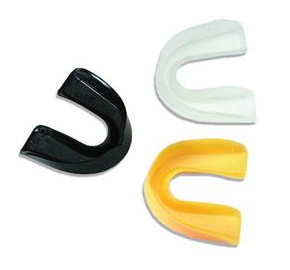
A lot of our patients play sports, and now is a great time to remind all of you to take care of both your mouth and appliances while participating in sports – especially contact sports such as soccer, football, baseball and basketball.

One of the most important pieces of sports equipment you can wear on the field this summer is a mouth guard. A well-fitted mouth guard allows you to breathe and speak more clearly, in addition to protecting your mouth and appliances. Only by using a mouth guard can athletes avoid serious mouth and jaw injuries. The next time you’re in for an adjustment appointment, we encourage you to let us know if you’re playing or planning to play any sports. We can recommend a mouth guard that will work best for you. Also, here are five quick tips for keeping yourself safe during sport activities this summer:

• Wear a helmet
• Stretch before and after a game or practice
• Wear protective eyewear
• Wear a face shield to avoid scratched or bruised skin
• Be observant, even as a spectator

We hope this helps! You can always contact us if you have any questions! Good luck on the field!

Friday, July 13, 2012

Top ten tips for keeping your BRACES sparklin’ clean!


Keeping your teeth clean is more important than ever when you have braces!

Food bits have more spots than usual to hide in your mouth, so you must be diligent in order to avoid bad breath, swollen gums, discolored teeth and cavities. If you remove plaque regularly during treatment, you'll experience better results and shorter treatment time. Keep plaque at bay with these top ten tips:

1. One tooth at a time.

When you brush, take time with each individual tooth – at least 10 seconds each – and pay careful attention to the spots where your teeth touch your braces.

2. It’s all about the angles. Brush the tops of your teeth and braces with your brush angled down toward where they meet. Brush the bottoms of your teeth and braces with your brush angled up.

3. The tooth, the whole tooth, nothing but the tooth. While the front surface of your teeth may seem like the most logical to clean, it’s equally important to clean the inner surface of your teeth (tongue side) as well as the chewing surface. And be sure to clean along your gum line – a key spot for plaque buildup.

4. Step 1: eat, step 2: clean. While you’re in treatment, it’s important to brush after every meal. Bits of food can easily get caught between braces and teeth, and these food bits interact with bacteria in your mouth to cause decay. The longer food is in contact with your teeth, the greater opportunity for plaque to form. If you are eating somewhere that you can’t brush, thoroughly rinse your mouth with water.

5. Like a Boy Scout, always be prepared. The easiest way to be sure you can brush after every meal is to get in the habit of taking a toothbrush, toothpaste and floss with you wherever you go. Designate a special container just for your teeth-cleaning tools and keep it in your purse, backpack, or laptop case.

6. Remove the moving parts. If you have elastic bands or headgear, remove these parts before you brush or floss.

7. Fluoride is your friend. Fluoride helps prevent cavities. Be sure to brush with fluoride toothpaste, and rinse with fluoride mouthwash.

8. Pointy brushes reach tiny places. Interproximal brushes (sometimes called proxa brushes or interdental brushes) are cone-shaped and come in very handy for reaching spots around your braces that standard brushes can’t.

9. Find the floss for you. Regular floss works for some patients, but others find it easier to work with a floss threader, which helps you get the floss into tight places. Other patients like an all-in-one product called Superfloss, which comes with a stiff end for easy threading, a spongy section for cleaning wide spaces, and regular floss for narrow spaces.

10. Make time for the pros. It’s your job to take care of the everyday cleaning. But make sure to visit your dentist regularly while in treatment, to get the deep, thorough cleaning that only a professional can provide. If you need help finding the right Dentist for you, feel free to contact our office - we’d love to help!

We hope this helps, and remember to give our team a call if you ever have any questions!

Friday, July 6, 2012

2012 NJ Top Dentist Recognition!


Look who has been selected as a NJ Top Dentist for 2012! It’s our very own Dr. Chung!

We’re proud to be Edison and Union, New Jersey’s trusted orthodontic practice, and we thank you for helping to make us who we are!

If you’re looking for an unmatched orthodontic experience, don’t hesitate to contact our practice to schedule a complimentary consultation for yourself or your family! We look forward to continuing to be your trusted New Jersey orthodontist and helping you achieve a lifetime of the most brilliant smiles!

Thursday, June 28, 2012


Does your little one love visiting Dr. Chung and staff? If so, we want you to head over to the New Jersey Family website to vote Dr. Chung for: New Jersey's Favorite Kids' Docs?

We are proud to provide the families of the Edison and Union communities with nothing but the most rewarding and beneficial orthodontic care available! Thanks for your support!


Wednesday, May 9, 2012

Ask Dr. Chung: “What Should I expect During My Initial Consultation?”

Great question! When you first come in for your initial consultation, Dr. Chung will conduct a comprehensive examination to assess your oral health. This will better enable us to determine the best treatment method for you.

Your orthodontic evaluation will consist of an oral and facial examination to assess your oral health. We will have you take intraoral and facial photographs as well as panoramic and cephalometric X-rays to help determine the proper orthodontic treatment method. Then, an impression of your teeth and bite will be taken to construct a model of your mouth. (This will help us when examining your diagnostic records).

At your second appointment, Dr. Chung will discuss your options with you. Our team feels it’s important to take the time to carefully examine your diagnostic records after your consultation so that we can more thoroughly prepare for your treatment at The Smile Solutions. This additional preparation will ensure that you receive the best orthodontic care possible. At this time, we encourage you to ask us any questions you may have about your treatment.

If you are seeking orthodontic treatment for your child, our staff asks that both you and your child attend the initial consultation. We feel it is important that both you and your child completely understand the doctor’s recommendations before we proceed with treatment. Give us a call today and schedule a consultation! We look forward to hearing from you!

Friday, May 4, 2012

May is National Teen Self-Esteem Month!

At our office, we know image can be everything. At an age when image is so important, the thought of having braces may intensify the already-delicate confidence of today's teens. Well, May is National Teen Self-Esteem Month, and during this time, parents are encouraged to act as positive role models, help stop negative self-images, and improve confidence and security among teenagers.
One of the great ways to improve your confidence is to improve your smile. And that begins with a consultation at our office. After all, what better time to avoid having crooked teeth in your adulthood than coming in for a consultation?
We invite you to give us a call to schedule a consultation or ask us on Facebook!

Wednesday, March 21, 2012

Am I Too Old for Braces?


Orthodontic treatment for adults is becoming more and more common. In fact, the number of adults getting braces has actually climbed 24 percent since 1996! More adults than ever are realizing that orthodontic treatment is not just for kids, and can help improve the aesthetics and health of a smile of any age! In society where appearance matters and can help make the difference between getting a job or a promotion, adults are choosing wisely to invest in orthodontic treatment.
Some of the most common reasons our adult patients come to us considering orthodontic treatment include:
• Teeth that are crowded or spaced apart, sometimes as a result of tooth decay or gum disease
• Pain or pressure from crooked teeth or a misaligned jaw
• A bad bite or malocclusion, causing teeth to fit together incorrectly
Most of all though, adult patients come to our office seeking a healthier mouth and a more confident smile! Orthodontic treatment at our office can be successful at any age, and adults especially can appreciate the benefits of a beautiful smile.
As an adult patient, we recognize that you have different needs than our younger patients, and we will work with you to ensure you receive the most appropriate treatment and that your needs are met with understanding and respect from us.
If you’ve been thinking about getting that perfect smile, we would love to have you visit for a consultation. We understand you have a busy schedule, and will work with you to find a time that is convenient for you. Please visit our website or give our office a call to schedule your appointment today!

Thursday, March 15, 2012

Connect with us on Facebook!

We’ve rolled out our new Facebook Timeline page and would love for you to check it out! You’ll find all the useful information that was there before, but now in a fun, new layout. When you connect with us on Facebook, you’ll be able to check out photos of our office, find out about new events and contests, or you can even leave a note about how much you enjoyed your visit at our office. We love hearing your feedback to make our practice serve you and your family even better. To make life even easier, if you “Like” us on Facebook, you’ll automatically receive updates from our office right on your own news feed!
See you on Facebook!

Thursday, February 23, 2012

President’s Day Fun Facts!


Monday was Presidents’ Day, a day known for celebrating of both George Washington’s and Abraham Lincoln’s combined Birthdays. Presidents’ Day was created in 1971, when President Richard Nixon combined the birthdays of two of our most well-known presidents into one single federal holiday. Presidents' Day also marks a hard-earned day off from work and school for a lot of our patients.

Here are a few fun facts about our nation’s presidents:

*Abraham Lincoln, our 16th president, carried letters, bills and notes in his tall stovepipe hat.

*George Washington is the first president to be featured on a postage stamp.

*Ronald Reagan, our 40th president, broke the so-called "20-year curse," in which every president elected in a year ending in zero died in office.

*Abraham Lincoln was the tallest of the U.S. presidents, measuring 6’ 4” tall.

*Virginia is the birthplace of more United States presidents than any other state, followed by Ohio and Massachusetts.

*Harry S. Truman was the first president to have his Inauguration and speeches televised.

Friday, February 17, 2012

Making Braces Fit into Your Life

When you get braces at Smile Solutions there are a few things you’ll have to adjust to get optimal results in the shortest amount of time. If you have any questions about the “do’s and don’ts” of living with braces, feel free to ask Dr. Christopher Chung or any member of our staff during your next adjustment!

Eating

When you have braces, there are a few types of food that can damage your brackets and bend your wires, leading to more appointments and longer treatment times. By simply avoiding sticky, chewy, crunchy, and hard foods, as well as foods that require biting into like corn on the cob, your orthodontic experience will be much easier.

Cleaning

You’ll never believe the amount of food that can get stuck between your braces when you eat. In addition to causing bad breath and tooth decay, it looks pretty gross, too. It’s so important to brush your teeth after every meal and floss every day, and even though it’s kind of a hassle, it’ll all be worth it in the end.

Sports

Protecting your smile if you play sports is essential when you have braces. Mouth guards help protect your teeth and gums from injury.

Friday, February 10, 2012

How long does orthodontic treatment take?

Your smile is totally unique, so the time you’ll need to spend undergoing orthodontic treatment will also be unique. Generally, orthodontic treatment will take about two years, and this is for good reason. During this time, your teeth will slowly move into their desired positions, leaving you with a great smile with as little discomfort as possible. Rushing treatment can result in a less than perfect smile with a greater chance of tooth movement after your treatment is complete. At Smile Solutions, we don’t want to waste your time with treatment that won’t retain your smile for the rest of your life.

Of course, treatment time will vary depending on your specific situation. Very minor tooth movement may only take a few months to correct, while serious malocclusion (poor bite) may need more than two years to correct. Only Dr. Christopher Chung will be able to accurately estimate the time your treatment will take. But trust us—it’ll all be worth it in the end!

Has your child or teen visited Smile Solutions for a consultation? If not, please give us a call and let us help him or her begin the journey to a gorgeous smile!

Friday, January 20, 2012

Thanks to Invisalign, you can have a perfect smile without metal wires or brackets!


At Smile Solutions, we know image is everything. For many people, the thought of having metal brackets and wires attached to their teeth for two or more years may be more than enough to delay orthodontic treatment.

If you’ve been considering straightening your teeth but are apprehensive about metal wires and brackets getting in the way of your smile, Invisalign treatment at Smile Solutions may be a great solution. Invisalign, which straightens teeth through a series of clear, custom-fit removable aligners, does so in a way that is discreet and hardly noticeable.

If you have questions about Invisalign, or would like to find out if you are a candidate for Invisalign treatment at our office, please give us a call to schedule a consultation with Dr. Christopher Chung.

Thursday, January 12, 2012

Dr. Christopher Chung, reminding you to protect your mouth this winter


With winter sports under way for a lot of our patients, Dr. Christopher Chung thought it would be a good time to remind our young athletes wearing braces to take care of both their mouth and appliances while participating in contact sports (and non-contact sports) this winter.

More than half of the seven million sports and recreation-related injuries that occur each year are sustained by youth between ages 5 and 24. Sixty-seven percent of parents say their child does not wear a mouth guard, yet, 70 percent say their biggest fear when their child plays is that they will get hurt. Despite the risks, many kids are still not wearing mouth guards and facial protection during games and practices.

Many people think a mouth guard is effective just to protect your teeth. But research has shown mouth guards can also reduce lower jaw impact that causes concussions and other dental injuries. Our staff at Smile Solutions encourage you to head over to the American Association of Orthodontists’ website for a quick primer on the importance of mouth guards and facial protection.

We hope this helps you remember to always wear a mouth guard and other forms of protective gear when participating in fall sports! We encourage you to give us a call if you have any questions or ask us on Facebook!

Thursday, December 29, 2011

Happy New Year from Smile Solutions


The year is almost over, so we wanted to ask what was memorable about 2011 for you, and what are you looking forward to in 2012? Do you have a new year's resolution, or any exciting plans for the coming year?

Have a safe and happy New Year, from Smile Solutions!

Thursday, December 22, 2011

Patient Referral Rewards iPad 2 Winner!

Congratulations Christopher Cuevas! He won the iPad2 for our Patient Referral Rewards. We will be drawing another iPad2 winner in February, 2012.

Monday, December 19, 2011

What do you love about the holidays?

In this season given to tidings of comfort and joy, and as our team at Smile Solutions reflect on the year that was, we’d like to ask you, our wonderful patients: What do you love about the holidays this year? Being with your loved ones? A clean slate for 2012? Opening presents by the fireplace? All the delicious food? Also, what gift are you most looking forward to getting this year?

We’d love if you shared with us all the things you love about the holidays. Stay warm, and don’t forget to stay away from those sweets!